
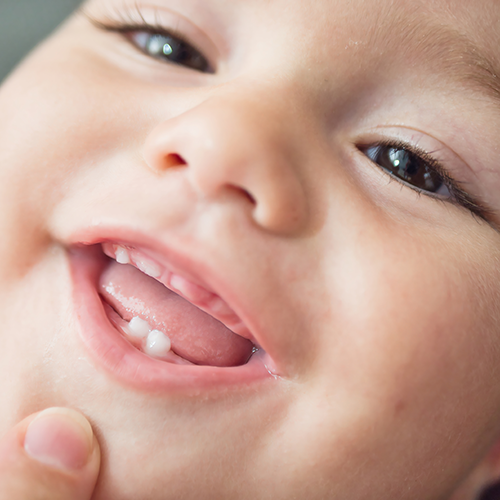
When your baby’s first tooth erupts, it’s a major milestone in their development, signaling the beginning of their oral health journey.
Schedule your baby’s first dental visit by their first birthday. This early visit will set the tone for a positive relationship with the dentist and help prevent future dental issues. Keep the visit upbeat, and avoid using words that might cause unnecessary fear (such as “needle” or “hurt”). Pediatric dental teams use child-friendly language to explain procedures and ensure your little one feels comfortable.

Before Teeth Erupt: After feedings, gently wipe your baby’s gums with a damp washcloth to remove plaque.
Once Teeth Appear: Begin brushing with a soft toothbrush as soon as the first tooth emerges.
Bedtime Bottles: Avoid giving your baby a bottle at bedtime, as it can cause tooth decay. If needed, make sure it’s filled with only water.
When Do Teeth Appear?: Teething usually begins between 6-8 months. The first teeth are often the lower front (anterior) teeth, followed by the upper front teeth. This process continues until all 20 primary teeth appear by around age 3.
Permanent Teeth: Permanent teeth typically begin to emerge around age 6, starting with the first molars and lower central incisors.
What is it?: This condition results from exposing your baby’s teeth to sugary liquids, such as milk, formula, or juice, for prolonged periods. Bedtime bottles filled with sweet liquids can lead to rapid tooth decay.
Prevention Tips: Never put your baby to bed with a bottle other than water. If your baby refuses to sleep without their usual beverage, try diluting it with water over time.
For Infants: After feedings, use a wet washcloth or gauze to wipe your baby’s gums and emerging teeth.
For Toddlers: Begin brushing their teeth twice a day with a soft toothbrush and a small amount of fluoride toothpaste once they’re old enough to spit.
Routine Visits: The American Academy of Pediatric Dentistry recommends regular check-ups starting at your baby’s first birthday, and every six months thereafter.
Is It Normal?: Sucking on thumbs or pacifiers is a natural soothing habit for many babies. However, if thumb sucking continues after the eruption of permanent teeth, it can impact tooth alignment and jaw growth.
Encouraging Cessation: Most children stop thumb sucking between ages 2-4. If thumb sucking persists, work with your pediatric dentist for strategies to help your child stop.
Primary (baby) teeth play a crucial role in:
By establishing a good oral hygiene routine early, you’re setting the foundation for a lifetime of healthy smiles. Regular dentist visits, healthy habits, and a little guidance will help ensure your child’s teeth stay strong and cavity-free.