Dental Emergencies in Children – What to Do Before You Reach the Dentist
Posted on May 15, 2026
If you’ve visited an orthodontist recently, you may have noticed that messy dental impressions are becoming a thing of the past. Thanks to advances in orthodontic technology, digital scanning now allows orthodontists to create highly accurate 3D images of your teeth and bite without trays of gooey impression material.
Digital scanning has transformed the way orthodontic treatment is planned and monitored. Whether you’re considering braces or Invisalign, a digital scan helps your orthodontist create a customized treatment plan designed specifically for your smile.
Dental emergencies in children tend to happen fast, often during play, sports, or even while eating something simple at home. For parents, it can be stressful trying to decide what needs immediate attention and what can wait. Knowing the right steps in the moment can help reduce pain, protect a tooth, and prevent complications.
At Dr. Camp’s Pediatric Dental Center, we help families manage urgent dental situations with calm, gentle care designed specifically for children. Whether it is a sudden toothache or a knocked-out tooth, quick action paired with the right guidance can make a real difference in outcomes.
This guide walks through the most common dental emergencies, what you can do at home, and when it is time to seek professional care.
What Counts as a Dental Emergency in Children
Not every dental issue requires an immediate visit, but some situations should be handled quickly to reduce pain or protect long-term oral health. In general, a dental emergency involves injury, sudden pain, bleeding, swelling, or a tooth that has been damaged or displaced.
Common examples include:
- Severe or persistent tooth pain
- A knocked-out or partially dislodged tooth
- Broken, chipped, or fractured teeth
- Cuts or injuries to the lips, tongue, or cheeks
- Swelling in the face or gums
If a child is in significant discomfort or there is visible damage to a tooth or surrounding tissue, it is best to contact a dental professional right away.
Toothaches and Sudden Dental Pain
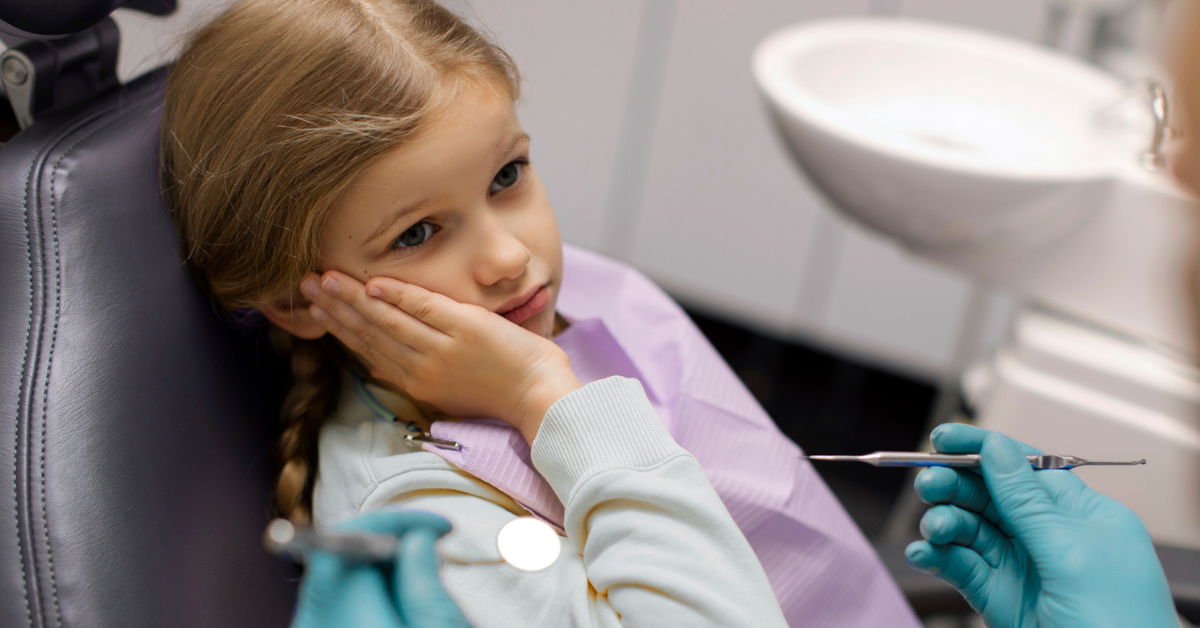
Toothaches are one of the most common reasons parents seek emergency dental care. Pain may appear suddenly or build over time, and children may not always be able to describe exactly what they feel.
Start by gently checking the area. Food or debris may be stuck between teeth, which can sometimes cause sharp discomfort. Have your child rinse their mouth thoroughly with warm water. Flossing around the affected tooth can also help remove trapped particles.
If swelling is present, apply a cold compress to the outside of the cheek to help reduce inflammation. Over-the-counter pain relief may be used according to package instructions, but avoid placing any medication directly on the gums or tooth.
Do not place aspirin on the affected area, as it can irritate or damage soft tissue. Even if the pain improves temporarily, a dental exam is still important to identify the underlying cause, such as decay or infection.
Knocked-Out Permanent Tooth
A knocked-out tooth requires immediate attention. Acting quickly can increase the chances of saving it, especially if it is a permanent tooth.
If a tooth is knocked out, locate it right away. Hold it by the crown, which is the chewing surface, and avoid touching the root. If it looks clean and intact, you may gently rinse it with water, but do not scrub or remove attached tissue.
If possible, try to place the tooth back into the socket and have the child bite gently on gauze to keep it in place. If reinserting it is not possible, store the tooth in a container of milk or have the child hold it inside their cheek if they are old enough to do so safely.
Time is a major factor here. A dentist should evaluate the child immediately, ideally within an hour if possible. Even if the tooth cannot be saved, prompt care helps protect surrounding teeth and tissue.
Cut or Injured Tongue, Lip, or Cheek
Soft tissue injuries inside the mouth often happen during falls, sports, or accidents while chewing. These injuries can bleed heavily at first, which can be alarming, but many can be managed with simple first aid.
Start by rinsing the mouth gently with clean water. Apply a cold compress to the outside of the face to help reduce swelling and discomfort. If there is active bleeding, use a clean piece of gauze or cloth and apply gentle, steady pressure.
If bleeding continues beyond 15 minutes or cannot be controlled with pressure, it is important to seek emergency medical attention. Deep cuts may require stitches or further evaluation to ensure proper healing.
Chipped or Broken Teeth
Chipped or broken teeth are common during play, sports, or accidental falls. Even a small chip can expose sensitive areas of the tooth, leading to discomfort or increased risk of decay.
If a tooth is chipped, rinse the mouth with warm water and check for any missing fragments. If you find pieces of the tooth, save them and bring them to the dental appointment if possible. A cold compress can help reduce swelling if the area is tender.
Avoid chewing on the affected side until it has been evaluated. Some chips may be minor and easily smoothed or repaired, while others may require restorative treatment to protect the tooth.
Swelling and Signs of Infection
Swelling in the face, gums, or jaw can be a sign of infection or deeper dental issues. This type of emergency should not be ignored, especially if it is accompanied by pain, fever, or difficulty eating.
A cold compress may help with discomfort, but swelling often indicates an underlying problem that needs professional care. Prompt evaluation helps prevent the infection from spreading and allows for faster treatment.
What to Do After Hours
Dental emergencies do not always happen during regular office hours. If your child experiences a dental emergency outside of business hours, leave a message at the office number for instructions or guidance on next steps.
For severe injuries involving uncontrolled bleeding, facial trauma, or difficulty breathing, go to the nearest emergency room or call 911.
For most urgent dental concerns, follow-up care with a pediatric dentist is still needed after emergency stabilization to ensure proper healing and treatment.
You can reach Dr. Camp’s Pediatric Dental Center at (301) 989-8994 for urgent guidance.
Why Pediatric Dental Care Matters in Emergencies
Children respond differently to dental injuries compared to adults, both physically and emotionally. A pediatric dental team understands how to communicate with children in distress while also addressing the clinical side of the injury.
At Dr. Camp’s Pediatric Dental Center, care is tailored to help children feel safe while receiving treatment. Fast response, gentle techniques, and clear communication with parents help reduce stress during urgent situations.
Emergency care is not only about fixing the immediate issue. It also involves protecting developing teeth, monitoring growth, and preventing long-term complications.
Knowing how to respond in the moment helps protect teeth, reduce pain, and support better outcomes. Quick action and the right care make a meaningful difference.
Preventing Dental Emergencies
Not all emergencies can be avoided, but a few simple habits can reduce risk. Protective steps are especially important for active children involved in sports or physical play.
Helpful prevention steps include:
- Wearing mouthguards during sports or recreational activities
- Regular dental checkups to catch small issues early
- Teaching children not to use teeth to open packages or bite hard objects
- Encouraging safe play habits at home and school
Routine care helps identify weak spots in teeth or early decay before they turn into urgent problems.
Frequently Asked Questions About Dental Emergencies
1. What should I do first if my child has a dental emergency?
Start by checking for bleeding, swelling, or damage to teeth. Rinse the mouth with warm water if possible, apply a cold compress for swelling, and contact a pediatric dentist as soon as possible for guidance.
2. Can a knocked-out baby tooth be reinserted?
No, baby teeth should not be reinserted. Instead, focus on controlling bleeding and discomfort, then schedule a dental visit to ensure there is no damage to surrounding structures.
3. How long can a knocked-out permanent tooth survive outside the mouth?
Time matters. A permanent tooth has the best chance of being saved if it is reinserted within an hour. Keeping it moist in milk or saliva helps preserve it until treatment.
4. Should I go to the ER or the dentist for a dental emergency?
Go to the emergency room if there is uncontrolled bleeding, serious facial trauma, or difficulty breathing. For most dental injuries, a pediatric dentist is the best place for follow-up care and treatment.
5. What if my child’s tooth pain stops suddenly?
Pain that stops does not always mean the problem is gone. It may indicate that the nerve is affected or that infection is present. A dental exam is still recommended.