
When Should a Child Stop Using a Pacifier? A Pediatric Dentist’s Guide
Posted on September 23, 2026
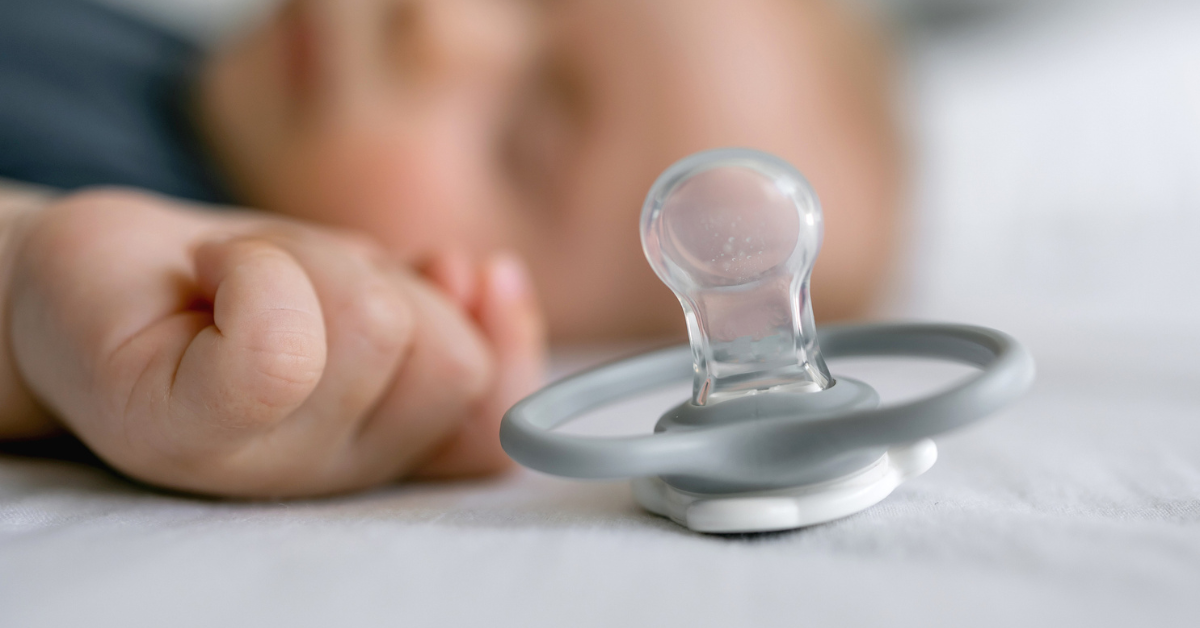
For many babies and toddlers, a pacifier is much more than a small piece of baby gear. It can provide comfort during stressful moments, help a tired child settle down, and satisfy the natural sucking reflex that infants are born with. For parents, a pacifier can also become an important part of naps, bedtime, travel, and everyday soothing.
As your baby becomes a toddler, however, you may start asking a different question: When should kids stop using pacifiers?
There is no need to panic if your toddler still loves a pacifier. Pacifier use is normal during infancy and early childhood. The concern is prolonged use, particularly as your child’s teeth, jaws, and bite continue developing.
The American Academy of Pediatric Dentistry (AAPD) recommends helping children discontinue nonnutritive sucking habits, including pacifier use, by 36 months of age. The AAPD also notes that pacifier use beyond 18 months can influence the developing mouth and bite. (AAPD)
Understanding the recommended pacifier age, possible effects on your child’s teeth, and gentle ways to break the habit can make the transition easier for everyone.
Why Do Babies Like Pacifiers?
Sucking is a natural reflex. Babies need it for feeding, but sucking without feeding can also have a calming effect.
A pacifier may help a baby settle when tired, upset, or uncomfortable. The American Academy of Pediatrics also recommends offering a pacifier at naps and bedtime during infancy because pacifier use during sleep is associated with a reduced risk of sudden infant death syndrome (SIDS). If a breastfeeding baby uses a pacifier, the AAP recommends waiting until breastfeeding is well established. (HealthyChildren.org)
Parents should not feel that pacifiers are automatically “bad” for children. The question is less about whether a baby should ever use one and more about how long the habit continues.
Pacifiers can be useful during infancy. As children grow, gradually reducing their dependence on one can help protect their developing teeth and bite.
When Should Kids Stop Using Pacifiers?
For parents searching for a straightforward answer to when to stop pacifier use, age 3 is an important benchmark.
The AAPD encourages families to discontinue pacifier and other nonnutritive sucking habits by 36 months. Its current guidance notes that pacifier use after approximately 18 months can begin influencing the developing orofacial structures, with prolonged use associated with problems such as an anterior open bite and posterior crossbite.
That does not mean every child who uses a pacifier at 19 months will develop a dental problem. Duration, frequency, sucking behavior, growth, and individual development can all influence what happens.
A practical approach is to begin reducing pacifier dependence during the toddler years rather than waiting until the habit is firmly established at age 3 or beyond.
If your child is approaching age 3 and still regularly uses a pacifier, talk with your pediatric dentist about a plan for stopping.
How Can a Pacifier Affect Teeth?
One of parents’ biggest concerns is the connection between a pacifier and teeth.
During early childhood, the jaws, palate, and teeth are developing. Repeated sucking places pressure on these structures. When pacifier use continues frequently for a long period, that pressure can influence how the teeth and bite develop.
The AAPD reports that pacifier use beyond 18 months can influence the developing orofacial complex. Potential changes associated with prolonged use include:
Anterior Open Bite
An anterior open bite occurs when the upper and lower front teeth do not meet when the child closes their mouth. A visible space may remain between them.
A pacifier sitting between the teeth for long periods can contribute to this pattern.
Posterior Crossbite
A posterior crossbite occurs when some of the upper back teeth sit inside the lower teeth rather than in their expected relationship.
Long-term sucking habits can influence the shape and development of the dental arches and palate, contributing to bite changes in some children.
Changes in Tooth Position
Pacifier habits may also affect how individual teeth erupt or line up.
The length of time a child maintains the habit is particularly important. AAPD guidance indicates that the duration of the sucking habit may have a greater influence on malocclusion than frequency alone.
This is one reason gradually eliminating pacifier use during the toddler years is beneficial.
Will Pacifier Teeth Correct Themselves?
Parents sometimes notice that their toddler’s front teeth do not meet properly and immediately worry that braces will be necessary.
There is some reassuring news.
The American Academy of Pediatrics notes that if a child stops a sucking habit before the permanent front teeth erupt, there is a good chance that some bite changes may correct themselves naturally. If the bite does not improve or the permanent teeth are affected, orthodontic treatment may eventually be necessary.
Whether changes will resolve depends on the child’s age, growth, severity of the bite problem, and how long the pacifier habit continued.
Instead of trying to predict the outcome at home, have a pediatric dentist examine your child’s bite. Regular dental visits allow the dentist to monitor changes as your child’s mouth develops.
Is an Orthodontic Pacifier Better for Teeth?
Parents may see products marketed as “orthodontic pacifiers” and assume these designs cannot affect a child’s teeth.
That is not necessarily the case.
Pacifier shape and size may influence how a pacifier interacts with the mouth, but the AAPD notes that different pacifier designs interact with the palate based on their fit regardless of whether they carry an orthodontic label. Current evidence does not mean an orthodontic pacifier can be used indefinitely without concern for dental development.
The length of the habit still matters.
If you are deciding between pacifier types, your pediatric dentist can offer age-appropriate guidance based on your child’s development. Parents should also follow manufacturer age and safety recommendations.
Is a Pacifier Better Than Thumb Sucking?
Both pacifiers and thumbs satisfy the same natural desire to suck, and both can influence teeth and jaw development if the habit continues for too long.
There is one practical difference: parents can eventually take away a pacifier.
A thumb is always available.
The American Dental Association notes that pacifiers can affect teeth in essentially the same ways as sucking fingers or thumbs, but a pacifier habit is often easier to break. (MouthHealthy)
If your baby uses a pacifier comfortably, there usually is no reason to replace it with thumb sucking in an attempt to protect the teeth.
How to Stop Pacifier Use Without Making Bedtime Miserable
Knowing when to stop pacifier use is one thing. Convincing a toddler to give up a favorite comfort object is another.
A gentle, gradual approach often works better than turning the pacifier into a battle.
Start by Limiting Daytime Use
If your child uses a pacifier throughout the day, begin by limiting it to specific situations, such as naps and bedtime.
Keeping your toddler busy with toys, books, outdoor activities, and conversation can also reduce pacifier use caused by boredom.
Identify When Your Child Wants It Most
Does your child reach for the pacifier when tired? During separation from a parent? In the car? When upset?
Once you identify the trigger, introduce another source of comfort. This might be a favorite stuffed animal, a hug, a song, a story, or a predictable bedtime routine.
Use Positive Reinforcement
Praise your child when they go without the pacifier.
The American Academy of Pediatrics recommends praise and rewards rather than harsh words, teasing, or punishment when helping children break sucking habits. Sticker charts and small daily rewards can work well for some children.
Keep the tone positive. Giving up a soothing habit can be a significant transition for a young child.
Involve Older Toddlers in the Process
Children may respond better when they feel involved.
Talk about becoming a “big kid” and decide together when the pacifier will go away. Some families create a simple goodbye ritual or let their child place pacifiers in a special box.
What matters most is creating a clear, consistent plan that fits your child’s temperament.
Stay Consistent
Once you decide the pacifier is gone, repeatedly giving it back can make the process more confusing.
Expect a few difficult bedtimes. Offer extra comfort and maintain familiar routines while your child learns another way to settle.
What If My Child Refuses to Give Up the Pacifier?
Some children stop using a pacifier with surprisingly little resistance. Others become deeply attached to it.
If your child is approaching or past age 3 and attempts to stop have been unsuccessful, a pediatric dentist can help.
The goal is not to shame your child. A dentist can examine the bite, determine whether the habit is affecting oral development, and explain the importance of stopping in an age-appropriate way.
Sometimes hearing encouragement from someone other than a parent is surprisingly effective.
When Should a Dentist Check My Child’s Pacifier Habit?
You do not have to wait until you notice crooked teeth.
The AAPD recommends establishing a dental home by a child’s first birthday. Early visits provide an opportunity for parents to receive guidance about oral hygiene, feeding, tooth development, pacifier use, and other habits before problems develop.
Consider discussing pacifier use with your pediatric dentist if:
- Your child regularly uses a pacifier after age 2
- Your child is approaching age 3 and shows no interest in stopping
- You notice a gap between the upper and lower front teeth
- Your child’s bite appears unusual
- You are concerned about the shape of the palate
- You have tried to stop the habit without success
Early evaluation does not automatically mean your child needs treatment. Often, monitoring and helping the child stop the habit are all that is needed.
Pacifier Guidance at Dr. Camps Pediatric Dental Center
At Dr. Camps Pediatric Dental Center, we understand that every child develops at a different pace. Pacifier use is just one part of the bigger picture of your child’s oral growth.
Our pediatric dental team can evaluate your child’s teeth and bite, discuss pacifier habits, monitor jaw development, and help your family determine an appropriate time and strategy for weaning.
We provide dental care for children from infancy through adolescence, including preventive visits, oral hygiene education, monitoring of dental development, restorative treatment, and specialized care for children with unique health needs.
Families also benefit from Spanish-speaking staff and acceptance of most insurance plans.
You can visit Dr. Camps Pediatric Dental Center at 12520 Prosperity Drive, Suite 300, Silver Spring, MD 20904.
Frequently Asked Questions About Pacifiers
At what age should a child stop using a pacifier?
The AAPD encourages discontinuing nonnutritive sucking habits by 36 months of age. Because prolonged use can begin influencing oral development earlier, parents can start gradually reducing pacifier use during the toddler years.
Can a pacifier cause crooked teeth?
Prolonged pacifier use can contribute to changes in tooth position and bite, including anterior open bite and posterior crossbite. The risk generally increases when the habit continues for a longer period.
Can pacifier teeth go back to normal?
Some bite changes may improve after the sucking habit stops, particularly when it ends before permanent front teeth erupt. A pediatric dentist should monitor your child’s development if changes are already visible.
Is age 2 too old for a pacifier?
Not necessarily, but age 2 is a good time to begin reducing reliance on it. The goal should be to discontinue the habit by age 3, with individual guidance from your child’s dentist.
Should I take the pacifier away all at once?
There is no single method that works for every child. Some respond well to stopping at once, while others benefit from gradually limiting pacifier use to sleep before eliminating it completely.
Are orthodontic pacifiers safe for teeth?
An orthodontic design does not eliminate the potential dental effects of prolonged pacifier use. Duration of the habit remains an important consideration.
Helping Your Child Say Goodbye to the Pacifier
A pacifier can be a helpful source of comfort during infancy, so parents do not need to feel guilty about using one. The focus should shift as your baby grows into a toddler.
Gradually reducing pacifier use and aiming to end the habit by age 3 can help protect developing teeth and support a healthy bite. If your child is struggling to stop or you have noticed changes in their teeth, professional guidance can make the process easier.
If you have questions about when your child should stop using a pacifier, schedule a visit with Dr. Camps Pediatric Dental Center. Our team can evaluate your child’s smile, monitor dental development, and help your family make the transition away from the pacifier with confidence.